


Working with Trauma Survivors
Critical Variables when Identifying Trauma in Clients for Mental Health & Healthcare Professionals
- Speaker:
- Robert Lusk, PhD
- Duration:
- 1 Hour 06 Minutes
- Language:
- Presented in EN, subtitles in EN, ES, DE, IT, and FR, handouts in EN, ES, DE, FR, and IT
- Copyright:
-
19 Jul, 2022
- Product Code:
- POS059007
- Media Type:
- Digital Seminar

Description
Whether you’re a therapist or healthcare provider, missing client’s trauma cues can leave them with no path forward in life…
Co-occurring symptoms, complex trauma and other factors muddy the waters even more.
Gain the education to identify and assess critical variables with trauma survivors. Join Robert Lusk, PhD, and get training to:
- Spot the differences between developmental, complex & other trauma types
- Simplify diagnosis with updates from DSM-5-TR™
- Assess for co-occurring disorders
- Interpret current research for improved clinical outcomes
- Conceptualize treatment through a trauma phase framework
Don’t miss the signs of trauma – help your clients get the treatment they need from the first visit.
Credit
This self-study program consists of 1.25 clock hours of continuing education instruction. Credit requirements and approvals vary by country and local regulatory bodies. Please save the course outline, the certificate of completion you receive from the activity and contact your local regulatory organization to determine specific eligibility and requirements.
Handouts
| File type | File name | Number of pages | |
|---|---|---|---|
| Manual - Working with Trauma Survivors (1.3 MB) | 26 Pages | Available after Purchase | |
| Manual - Working with Trauma Survivors - French (1.3 MB) | 26 Pages | Available after Purchase | |
| Manual - Working with Trauma Survivors - Italian (1.3 MB) | 26 Pages | Available after Purchase | |
| Resources Handout (84.2 KB) | 1 Pages | Available after Purchase | |
| Manual - Working with Trauma Survivors - German (1.3 MB) | 26 Pages | Available after Purchase | |
| Resources Handout - German (84.2 KB) | 1 Pages | Available after Purchase | |
| Manual - Working with Trauma Survivors - Spanish (1.3 MB) | 26 Pages | Available after Purchase | |
| Resources Handout - Spanish (84.2 KB) | 1 Pages | Available after Purchase | |
| Resources Handout - French (84.2 KB) | 1 Pages | Available after Purchase | |
| Resources Handout - Italian (84.2 KB) | 1 Pages | Available after Purchase |
Speaker
Robert Lusk, PhD Related seminars and products
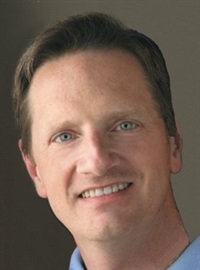
Robert Lusk, PhD, has devoted his career to working with trauma survivors and their families, and providing training and consultation to parents, military families, and professionals on trauma-related issues, parenting special needs children, attachment disorders, psychotropic medications, reintegration after deployment, and psychiatric disorders. For the past 26 years, Dr. Lusk has served as clinical director at The Baby Fold. There, he designs and implements new programs, and provides clinical supervision, consultation and oversight to all the agency’s treatment programs.
Dr. Lusk completed a full-time internship at the Brentwood Veterans Administration Medical Center in Los Angeles, where he focused on PTSD treatment for combat veterans. He has continued to provide supervision, training, and treatment for veterans and other adult trauma survivors for the past 30 years.
Dr. Lusk also instructs courses at Illinois Wesleyan University and has been actively involved in investigative research on trauma for over 30 years, including studies of treatment approach efficacy and cognitive and school-related effects of trauma. He has published several journal articles and book chapters on understanding and treating trauma.
Dr. Lusk earned his Master’s and Doctoral degrees in clinical psychology from the University of California at Los Angeles and has trained in a variety of interventions including Trauma-Focused Cognitive Behavioral Therapy, the Attachment, Regulation, and Competency (ARC) model, Collaborative Problem-Solving, couples and family therapy, Trust-Based Relational Intervention, and Eye Movement Desensitization and Reprocessing (EMDR).
Speaker Disclosures:
Financial: Dr. Robert Lusk maintains a private practice and has an employment relationship with Illinois Wesleyan University. He is a consultant for The Baby Fold. Dr. Lusk receives a speaking honorarium and recording royalties from PESI, Inc. He has no relevant financial relationships with ineligible organizations.
Non-financial: Dr. Robert Lusk is a member of the American Psychological Association.
Additional Info
Program Information
Access for Self-Study (Non-Interactive)Access never expires for this product.
For a more detailed outline that includes times or durations of time, if needed, please contact cepesi@pesi.com. ** no”Access to Self Study” tab available.
Objectives
- Determine the development of trauma and a trauma treatment framework.
- Analyze DSM-5-TR™ criteria and assessment of trauma disorders and comorbidities.
- Appraise trauma research and phases of trauma treatment.
Outline
Critical Variables in Clinical Work with Trauma Survivors- Risk Factors for worse effects of trauma
- Personal risk factors
- Event-related risk factors
- Big T vs. little t trauma and toxic stress
- Recovery environment factors
- Survival Mode
- Helping clients without physical/emotional safety
- Developmental factors & complex trauma
- Current research
- Trauma- and Stressor-Related Disorders: Main symptoms & common pitfalls
- A new disorder in 2022: Prolonged Grief Disorder
- My “favorite” trauma diagnosis
- Dissociative Disorders
- Assessment skills & scales
- Managing co-occurring disorders
- DSM-5-TR™ diagnostic criteria & how to use it
- Trauma symptoms commonly addressed in treatment
- NCTSN data (Youth)
- Adult samples
- Effects of trauma
- Common effects and problems in addition to PTSD (including the pandemic)
- 5 Common trajectories of trauma symptoms
- Prevalence of trauma and PTSD
- Phases of treatment
Target Audience
- Counselors
- Social Workers
- Psychologists
- Case Managers
- Addiction Counselors
- Therapists
- Marriage & Family Therapists
- Nurses
- Physicians
- Physicians Assistants
- Other Mental Health Professionals
Reviews
Satisfaction Guarantee
Your satisfaction is our goal and our guarantee. Concerns should be addressed to info@pesi.eu.
Please wait ...