


Suicide in Historically Marginalized Communities
Perception Versus Reality
- Speaker:
- Victor Armstrong, MSW, BS
- Duration:
- 1 Hour 05 Minutes
- Language:
- Presented in EN, subtitles in EN, ES, DE, IT, and FR, handouts in EN, ES, DE, IT, and FR
- Copyright:
-
09 Sep, 2021
- Product Code:
- POS058500
- Media Type:
- Digital Seminar

Description
There is myth in the Black community that Black people don't die by suicide and that acknowledging mental health challenges, like anxiety and depression, are signs of moral weakness. In this recording, Victor Armstrong will discuss the stigma around mental health and suicide among those in historically marginalized communities. He will discuss and uncover historical challenges of these communities, emphasizing Black men, in accessing care for mental health. He will discuss the way that perception and provider bias influence mental health access and suicidality among Black men.
Credit
This self-study program consists of 1.25 clock hours of continuing education instruction. Credit requirements and approvals vary by country and local regulatory bodies. Please save the course outline, the certificate of completion you receive from the activity and contact your local regulatory organization to determine specific eligibility and requirements.
Handouts
| File type | File name | Number of pages | |
|---|---|---|---|
| Manual - Suicide in Historically Marginalized Communities (6.3 MB) | 34 Pages | Available after Purchase | |
| Manual - Suicide in Historically Marginalized Communities - French (6.3 MB) | 34 Pages | Available after Purchase | |
| Manual - Suicide in Historically Marginalized Communities - Italian (6.3 MB) | 34 Pages | Available after Purchase | |
| Manual - Suicide in Historically Marginalized Communities - German (6.3 MB) | 34 Pages | Available after Purchase | |
| Manual - Suicide in Historically Marginalized Communities - Spanish (6.3 MB) | 34 Pages | Available after Purchase |
Speaker
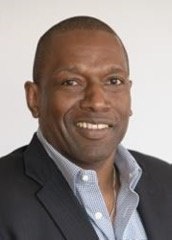
Victor Armstrong, MSW, BS Related seminars and products
Victor Armstrong joined North Carolina DHHS as Director of the NC Division of Mental Health, and Developmental Disabilities, Substance Abuse Services in March of 2020, with responsibility and oversight of the public community-based mental health, intellectual and other developmental disabilities, substance use, and traumatic brain injury system in North Carolina. Prior to accepting this role, Victor spent six years as Vice President of Behavioral Health with Atrium Health. Based in Charlotte, NC, Victor had responsibility for operations of Atrium's largest behavioral health hospital, Behavioral Health Charlotte (BHC). The BHC campus contains the southeast’s only psychiatric emergency department, staffed 24/7 with board-certified psychiatrists, as well as 66 inpatient beds, and 10 outpatient programs. Victor has over 30 years of experience in human services, primarily dedicated to building and strengthening community resources to serve individuals living with mental illness.
Victor currently serves on the board of directors for American Association of Suicidology (AAS), the American Foundation for Suicide Prevention (AFSP) of NC, and United Suicide Survivors International. He is also former board chair of NAMI NC, and member of National Association of Social Workers (NASW). Victor is a former member of the board of directors of National Council for Behavioral Health, i2i Center for Integrative Health, and RI International.
Victor's awards and recognitions include Mental Health America's 2021 H. Keith Brunnemer, Jr. Award for "Outstanding Mental Health Leadership", 2019 Black Mental Health Symposium - Mental Health Advocate of the Year, 2019 Atrium Health Excellence in Diversity & Inclusion Award, 2018 Distinguished Alumni Award from East Carolina University School of Social Work, Pride Magazine 2018 "Best of the Best", and i2i Center for Integrative Health 2018 Innovation Award for "Whole Person Care", 2012 National Alliance on Mental Illness (NAMI) NC, Mental Health Professional of the Year.
Victor graduated, Magna Cum Laude, from North Carolina Central University with a bachelor's degree in Business Management and received a Master of Social Work (MSW) from East Carolina University. He is the husband of Dr. Charletta Armstrong and the father of 3 sons, Carter, Alonzo, and Victor Jr.
Speaker Disclosures:
Financial: Victor Armstrong is the director of the North Carolina Division of Mental Health, Developmental Disabilities, Substance Abuse Services (DMHDDAS). He receives a speaking honorarium from PESI, Inc. He has no relevant financial relationships with ineligible organizations.
Non-financial: Victor Armstrong is a member of the American Association of Suicidology; and the National Association of Social Workers.
Additional Info
Program Information
Access for Self-Study (Non-Interactive)Access never expires for this product.
For a more detailed outline that includes times or durations of time, if needed, please contact cepesi@pesi.com
Objectives
- Appraise the historical biases in the structure of mental health services affecting the Black community.
- Investigate the impact of clinician biases on therapist-client interactions.
- Create enhanced rapport and empathy through decreasing clinician biases.
Outline
- Over and exploration of the impact of complex trauma and systemic racism on mental health outcomes for Black men.
- How to appraise and manage the impact of clinician’s own biases on therapist-client interactions.
Target Audience
- Counselors
- Social Workers
- Psychologists
- Psychotherapists
- Therapists
- Marriage & Family Therapists
- Addiction Counselors
- Case Managers
- Physicians
- Nurses
- Other Mental Health Professionals
Reviews
Satisfaction Guarantee
Your satisfaction is our goal and our guarantee. Concerns should be addressed to info@pesi.eu.
Please wait ...